






...

SowaanERP

What is ERP system?

ERP system refers to an integrated software that integrates and controls the important business processes with the help of a central database and a unitary workflow. Rather than having distinct systems to finance, human resource, inventory, procurement or sales, an ERP system integrates all the major functions into a single synchronized system. This makes sure that there is a consistency, accuracy and up to date data in the running of the organization as a whole. 

The current UAE ERP system has been crucial in any industry today since companies have operations that are much more complicated than ever. The businesses with several branches, internet transactions, high compliance, and high-rate customer demands require a system that can get rid of manual processes, data duplication and delays in operations. ERP system Dubai provides an organization system that fosters high performance, transparency establishment as well as seamless cooperation among departments.

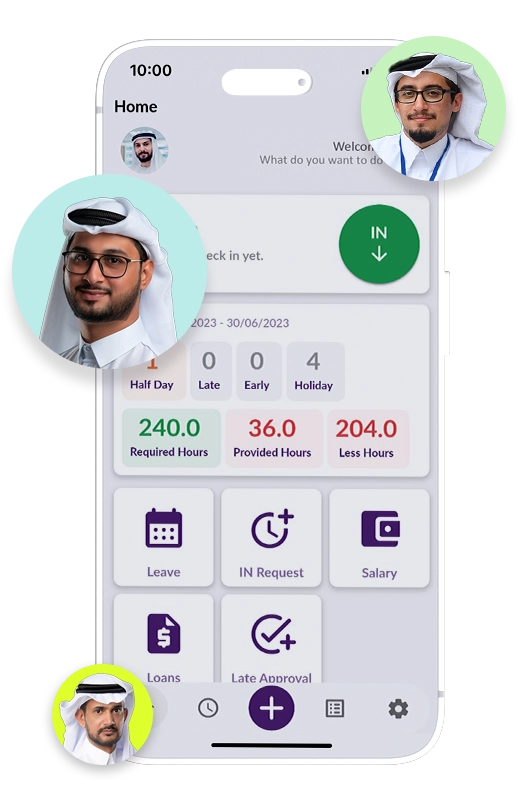
3 device for UAE d-min

Our Trusted Partner

Clear Definition of ERP

Fundamentally, an ERP system is enterprise management software which incorporates all business operations- finance and supply chain, human resources and customer dealings. It enables organizations to plan, track, examine and enhance daily practices in a safe and integrated setting. Every data is collected in a central repository so that the leadership teams can make real-time decisions using real insights as opposed to assumptions.

The rationale behind implementing ERP Systems by businesses is as follows

ERP systems are used by businesses to ensure consistency in their operations, minimise errors and assist in long term growth. With growth in the organization, there is confusion and inefficiency in manual tracking or individual software tools. An ERP solution can remove such problems because it will help them to standardize their processes, enhance the accuracy of their data, and get real-time viewability. Financial reporting, VAT compliance, and integrated systems are needed in UAE businesses especially by UAE-based companies which is facilitated by ERP.

The way ERP Systems Integrate Operations and Data

The benefit of an ERP system is that it is able to integrate all the workflows into one interconnected system. Whenever data moves efficiently among finance, inventory, HR, and sales, companies remove the gaps in communication and severely decrease the risks. Considering the following is an example; a sales order will automatically update inventory, generate a procurement requirement, and project revenue forecasts without any manual intervention. Such integration plays a critical role in an ERP system in UAE where firms are operating with high compliance requirements and high growth rates.

The reasons why UAE Businesses require ERP System today include

UAE is fast turning into one of the most digitized economies in the GCC. Since the efforts of government programs and enterprise-level transformation programs, business in Dubai, Abu Dhabi, Sharjah, and other emirates are moving towards automation. UAE environment renders the necessity of ERP more than ever.

Difficulties with UAE Businesses that do not have ERP

In the absence of ERP software UAE, companies experience serious challenges:

The problems are especially relevant to growing companies that operate in several locations or have to make large transactions. ERP system within UAE will reduce these problems through centralized control and automated processes that will deliver uniform performance in the organization.

Economic Landscape in the UAE: Compliance

Compliance has become a strategic issue due to the implementation of VAT, e-invoicing mandates, stringent reporting and fast economic diversification. Businesses must ensure proper financial accounting, openness of operations and generate periodical reports. The ERP software UAE enables these requirements through the automation of tasks associated with compliance, real-time financial reports, and the minimization of human mistakes that may result in punishments.
uae page illustration-01

Important ERP System functions include

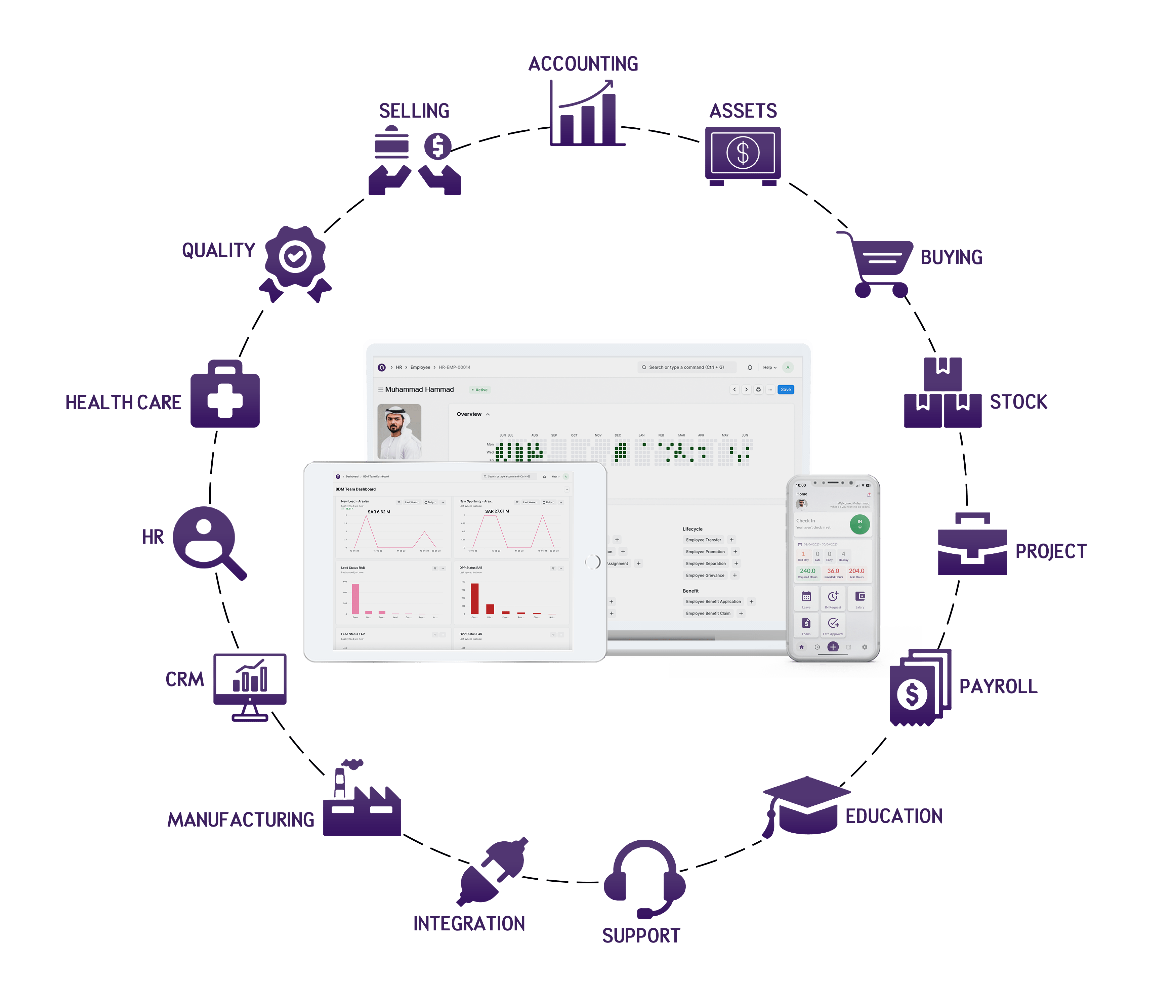
The ERP system in UAE will help to centralize various business operations using integrated modules. The modules have specific functions but they complement each other in the accuracy of data and its efficiency. The company plans to automate its financial and accounting procedures and operations as a method of financial management.

Finance and Accounting Automation

Every ERP system in UAE is based on financial management. Automated accounting processes will enable the organization to track expenses, payables and receivables, process invoices that are compliant with the VAT requirements and produce real-time financial statements. The ERP in UAE guarantees strict adherence to the local reporting requirements, the enhanced visibility of the cash-flow, and the information that can provide the leadership with the opportunity to make the financial decisions in a timely manner.

Inventory and Supply Chain Management

The company has an effective inventory and supply chain management in order to ensure that there is unending supply of raw materials and finished products in the market.
The retail, distribution, manufacturing, and trading firms in the UAE need enhanced control of supply chain. ERP system Dubai assists in monitoring the stock, the activities of a warehouse, the procurement schedule, as well as the optimization of demand forecasting. Inventory madness involves real-time inventory updates, which minimize stockouts, overstocking, and operational wastes.

HR & Payroll Management

Key pillars of operation are HR and payroll. An ERP software UAE consolidates employee information, automates the process of payroll processing, processes the leaves and attendance, and ensures that the UAE labor laws are adhered to. This saves on administrative workload and proper salary processing on a cycle basis.

Procurement & Vendor Control

The organized approval procedures, evaluation capabilities of a vendor, and live cost tracking can make procurement more efficient. ERP solutions UAE facilitate the purchasing process of requisition to purchase order and supplier payment, leading to transparency and eliminating unnecessary spending.

CRM & Sales Management

Revenue is generated through customer relationship and an ERP system in Dubai will offer smooth CRM capability to follow-up leads, sales performance and customer interactions. The availability and prices of products and past records of the customers are obtained instantly by sales teams to make decisions faster.

Time Reporting & Analytics

Information will be of utmost importance when it is precise and will be accessible at any given time. The ERP solutions UAE platform is used to combine all the information of the departments in interactive reports and dashboards. The leadership is able to study performance trends, find inefficiencies and track KPIs without resorting to multiple systems and manual spreadsheet analysis.

The behind-the-scenes of an ERP System
How it works

The effectiveness of ERP system in Dubai is that it is effective in managing data, automization of tasks and synchronization of operations in all departments.

Centralized Database

Integrated Workflows

Automation Cycle

Workflow Process (Inventory - Purchase - Invoice - Dispatch)

One of the simplest examples of how ERP system in Dubai improves coordination is the following:

The advantages of using an ERP System are

Adoption of an ERP system has long term strategic worth to the organizations within the UAE. With more and more operations requirements being processed by business, the serviceability of correctly managed data, integrated processes, and workflow automation must be necessitated. ERP in UAE represents a means of developing the operational modernization of companies through minimizing risks, enhancing efficiency, and enhancing financial transparency.

Productivity and Automation

A drastic increase in productivity is also one of the greatest benefits of ERP software UAE. The workflow engine of the system automates routine activities like data entry, reconciliation, inventory, payroll processing, and order tracking. This lowers the amount of manual labor, removes the bottlenecks, and increases the pace of every day activity. The workers are able to concentrate on more strategic work rather than administrative work and the departments can work off the same data. The outcome is increased productivity and capacity to expand business without the corresponding increase in the human resources requirement.

Real-time visibility and accuracy of data

Each department requires proper data to make sound decisions. In the absence of an integrated system, companies are faced with poor records, old spreadsheet sheets, and duplicate entries. ERP Dubai will provide real-time availability of accurate information because it has a central database.

Quicker Reporting and Compliance Preparedness

The regulatory process in the UAE is very rigorous in terms of financial accuracy, the rules of VAT, and reporting on time. ERP solutions UAE make the compliance process easier through automation of financial statements, tax reports, audit trails and documentation.

Minimized Operation costs and risks

Unnecessary costs and delays in operations normally arise due to errors and disconnection between the systems that are carried out by hand. ERP UAE system will help to eliminate such risks because it will standardize procedures and human intervention will be minimized. ERP automation brings down inventory shortages, procurement duplication, wrong invoices, payroll mistakes and late payments by a significant margin.

Improved Decision-Making by Analytics

The contemporary companies rely on proper and timely analytics to compete successfully. ERP software in the UAE has the sophisticated reporting software and the dashboards that are able to bring in performance indicators of the entire organization. The decision-makers will get an insight on the operations trends, financial performance, and resource usage. The leadership can use data-driven insights whether it comes to predicting demand, examining profitability, or assessing the performance of its vendors.

The UAE businesses have scalable growth opportunities

The UAE market is characterized by a high rate of development in such spheres as retail, logistics, manufacturing, hospitality, and services. ERP in UAE is scalable to meet the growing transaction volumes, new branches, new lines of products or more workforce demands. The system can be able to adjust as the organizations expand, without having to make major modifications to the underlying system.
SIDE IMAGE ILLUSTRATION-01-01-min

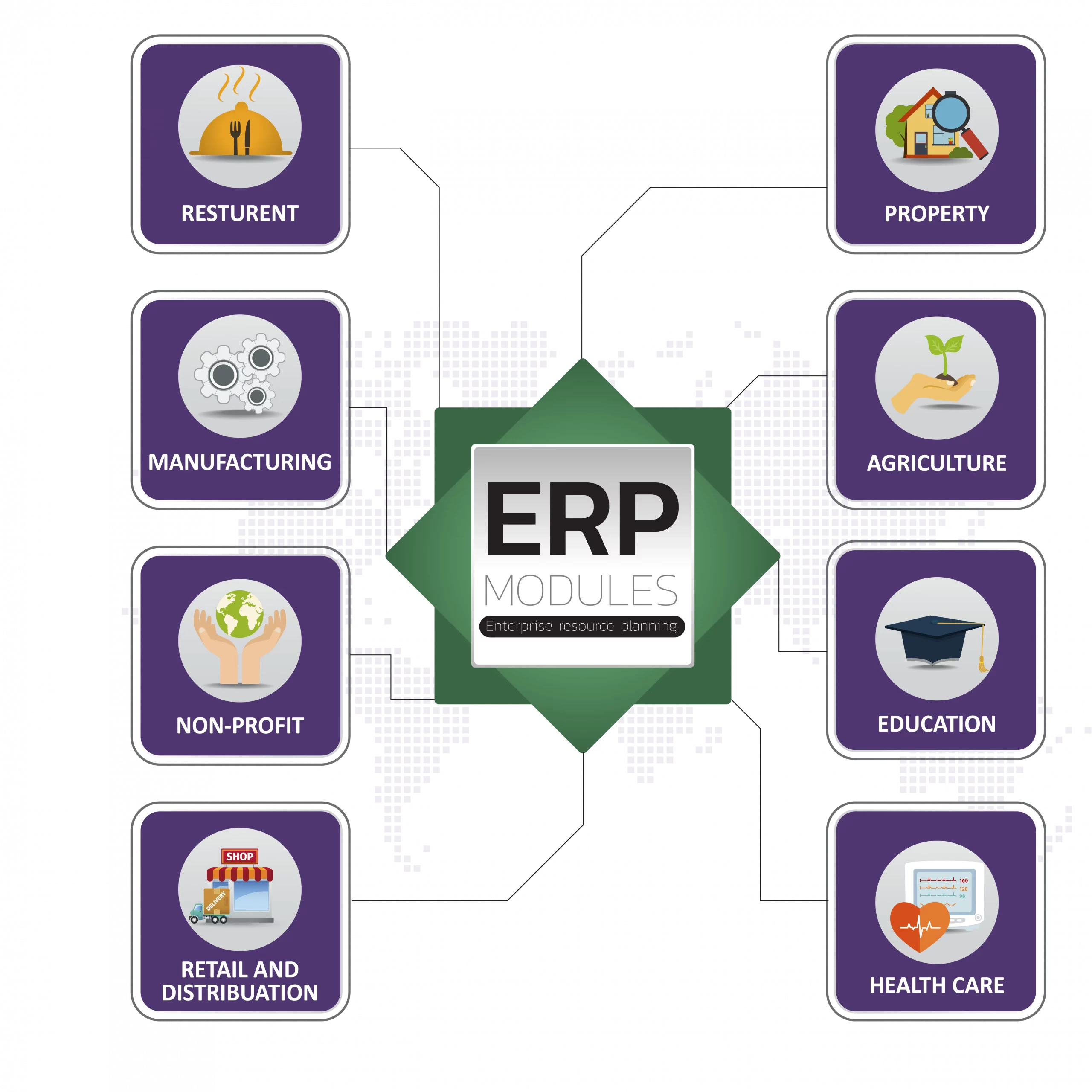
Examples of ERP System by Industry (UAE Use Cases)

Different industries have different usage of ERP systems to them based on their needs in the operations. ERP Dubai is flexible and modular and this gives businesses the opportunity to tailor the system to their industry specific requirements.

Manufacturing ERP

The UAE manufacturing companies necessitate rigid supervision on the planning of manufacturing, tracking of raw materials, maintenance of machines and fulfilling orders.

Retail ERP

Retailers rely on proper inventory visibility, real-time point of sale integration and quick customer services. ERP software UAE helps track stock across multiple locations, synchronize sales, auto replenishment, and track loyalty.

Wholesale & Distribution ERP

The logistics, warehousing, and distribution companies should have accurate monitoring, timely delivery, and good coordination with the vendors.

HR & Payroll ERP

All companies in the UAE in any industries need compliant payroll management in line with the labor laws. ERP Dubai offers automated payroll, management of employee data, tracking employee attendance, and human resources reporting.

Visitor Management ERP, Dubai

Companies that experience high traffic of visitors like corporate offices, schools, residential towers, and government offices use ERP systems to register visitors, control access, and manage identities.

Service Industry ERP

The ERP software in UAE integrates business operations, which enables the companies to streamline project schedules, manage spending, and enhance service delivery.

Types of ERP Deployment

Depending on the size of operations, the capabilities of IT resources, cost structure, and compliance restrictions, UAE businesses are able to choose between various deployment models.

On-Premise ERP

This model gives more control over the data and infrastructure but will need a large initial investment in hardware, maintenance, and security.

Cloud ERP

Cloud ERP is a growing trend in the UAE that is hosted by the ERP vendor. The firms do not even require a large IT staff since the vendor takes care of hosting, backups and security.

Hybrid ERP

A Hybrid deployment is a mix of cloud and on-premise deployments. The sensitive data can be stored on-site and other modules exercise cloud services. This is the choice that is appropriate to the organization.

Pros & Cons for UAE Companies

The UAE firms need to consider the cost control, data residency, scalability, the size of the workforce, and the compliance requirements.

Data security in ERP accounting solutions.

New SaaS Adoption

Enterprise-quality ERP tools are available to UAE businesses via Software-as-a-Service (SaaS) and do not require extensive infrastructure. Predictable subscription charges, accelerated onboarding, and reduced operational risk are beneficial to startups.

AI & Automation Access

The current Best ERP Dubai are equipped with functionality of built-in AI, predictive analytics, workflow automation, and smart decision-support systems. These characteristics assist the UAE business to streamline their operations, increase the accuracy of their forecasts, and decrease human labor.

Better Security

Cloud providers of ERP spend a lot on cybersecurity and provide enhanced encryption, multi-factor authentication, round-the-clock monitoring, and automatic backups. With the aspects of data protection tightening in the region, ERP software in UAE is critical in the process of enhancing online security.

The selection of the most effective ERP Software in UAE

The choice of the appropriate ERP system is a strategic choice in the long-run, which is likely to impact the operational efficiency, profitability, and scalability.

Must-Have Features

The Best ERP Dubai must contain built-in finance, human resource, inventory procurement, CRM, project, and reporting modules. It should also facilitate compliance with the VAT, e-invoicing standards, and synchronization of the data in real-time between departments.

Cost Considerations

Organizational needs to compare licensing models, implementation charges and customization needs and long-term subscription costs. Although cloud ERP Dubai is cheaper in terms of initial investment, there are industries that might choose the hybrid or on-premise operational control. It is necessary to find a balance between cost and capability.

Customization

Each UAE business has its own workflows. The ERP system adopted must enable the modules, workflows, approvals, dashboards, and reports to be customized without necessarily involving serious development efforts. It is flexible in configuration, which makes the system scalable to the future.

Local Support

Its successful implementation is dependent on the continuous technical support, localized configuration, and knowledge of compliance. A vendor that will provide experienced on-ground support in UAE will be a better choice to ensure an easier deployment and faster response to issues.

Integration Options

The most suitable ERP Dubai solutions can be connected with third-party solutions like POS systems, e-commerce stores, banking applications, and HR software. The smooth integration will eliminate data silos and improve the working process.
Compliance management features in ERP system.

Breakdown steps ERP Implementation (Simple)

The Best ERP in UAE deployment in UAE presupposes both the coordinated effort of departments and careful planning. Although the process might differ according to industry and scope, the basic steps are the same.
Multi-language and multi-currency HRMS software support.

Requirement Analysis

This stage entails the awareness of current working processes, discovering the gaps and the description of the operational requirements. Organizations establish user roles, reporting requirements, integration requirements as well as customization priorities.

System Selection

ERP software UAE providers can be seen by different companies depending on features, deployment, scalability, cost and relevance by industry. Shortlisted vendors provide demonstrations and solution workshops of capabilities of their system to assist organization in choosing the most suitable ERP in UAE to run their business.

Data Migration

Old system information, spread sheets, or other software applications are verified, purged and loaded into the Best ERP in UAE. Accuracy, elimination of duplication, and establishment of a solid foundation on future operations are guaranteed by proper migration.

Testing

Testing entails the validation of workflow, role permissions, integrations, the reporting structures, and the automation cycles. This would make all the modules to be working well in readiness of initiating the system into live operations.

Training

Training of employees is necessary in adoption. Workshops are provided to teams on system navigation, process management, reporting and best practices. Through training, organizations can exploit their investment on ERP solutions in UAE.

Go-Live

After the process of testing, the system becomes live when it is tested to be valid. The software is installed in departments in place of the old systems, where departments start using the software in their daily operations.

Post-Support

The continuous support after deployment gives smooth operations. The vendors help in optimization, upgrading and troubleshooting. The ongoing upgrades will assist the ERP system to provide sustainable efficiency and adhere to the changing regulations in the UAE.
Contact us for a free review of your needs

FAQs

One such ERP system is the SowaanERP which brings together finance, HR, inventory, sales, procurement and operations to a single platform.
ERP deals with the internal business processes like finance, supply chain, HR and operations and CRM deals with customer relationship, sales pipelines and customer interactions.
There are four major ERP categories, namely On-Premise ERP, Cloud ERP, Hybrid ERP and Two-Tier ERP.
ERP system refers to an Enterprise Resource planning platform that consolidates business information and automates fundamental business operations like finance, human resource, inventory, procurement and operations.

Integrate with your favorite apps

Seraphinite AcceleratorOptimized by Seraphinite Accelerator
Turns on site high speed to be attractive for people and search engines.