



Best Manufacturing ERP Software in UAE

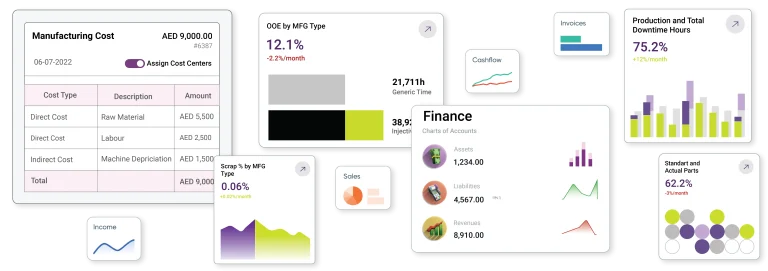
Manufacturing ERP software is specifically designed for manufacturing businesses and assists them to streamline and manage their entire manufacturing process. Unlike generic systems, Manufacturing ERP merges production planning, inventory, procurement, quality control, sales and supply chain processes into a single, coherent system.
The right manufacturing software can enhance the visibility of manufacturing operations, cut down on production costs, optimize resources, and help make better decisions for manufacturers in the UAE. SowaanERP is a manufacturing ERP that offers flexibility in manufacturing processes for businesses, making them more efficient and adaptable to the needs of the UAE market.

Explaining what manufacturing ERP software is and how it benefits factories.

Why ERP Software is crucial for manufacturing

There are various processes involved in manufacturing businesses, such as procurement of raw materials, inventory control, production planning, quality control, and distribution of the finished products. Manual management can cause delays, inaccurate information, overstock and increased operational expenses. An ERP for manufacturing integrates these processes into a single system. It provides manufacturers with critical operational data in real-time, enabling them to make more precise production plans, optimize resource utilization, and rapidly adjust to customer demands. An integrated ERP solution can offer improved production control and eliminate the reliance on `disparate spreadsheets and manual methods for businesses seeking ERP software for manufacturing industry.

Our Trusted Partner

The key aspects of Manufacturing ERP Software are

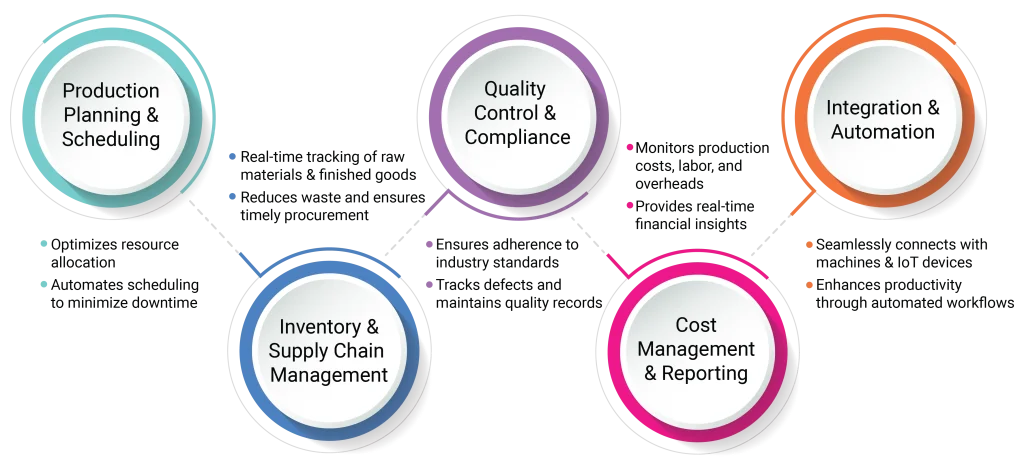
Today’s ERP software for manufacturing has been developed to satisfy the intricate business requirements of manufacturers. It can link various departments, streamline repeatable workflows, enhance visibility and deliver real-time data that could aid in making better business decisions.
Key featurer
inventory

Inventory Management

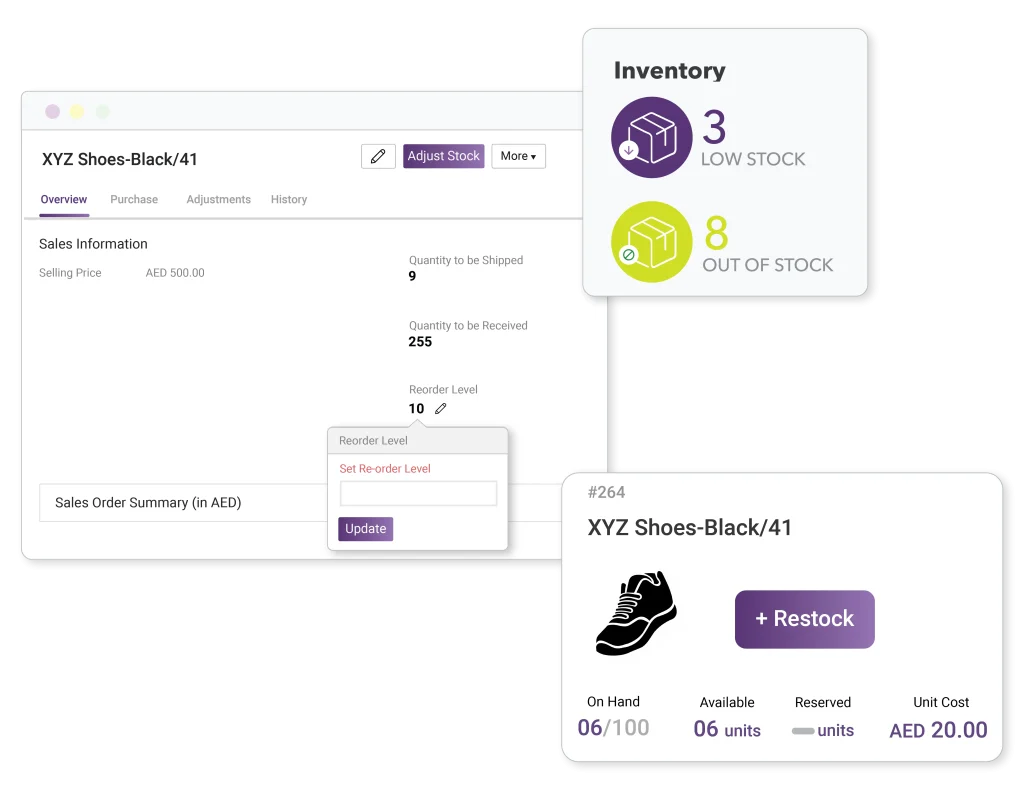
For manufacturers, inventory management is critical as they need to have their raw materials, components, work-in-progress, and finished goods available when they are needed to produce their goods.

Manufacturing ERP allows for real-time inventory visibility and helps in managing stock levels throughout the manufacturing process.

In ERP, purchasing and inventory mechanisms are integrated, allowing businesses to handle suppliers, automate purchasing needs, and ensure a steady flow of materials.

By analyzing past and present data, the manufacturers can predict the amount of materials needed and keep the necessary stock level according to the anticipated demand.

Production teams and purchasing groups can have access to real-time inventory data, which helps to minimize the risk of running out of materials and production delays.

Distribution ERP

When the production is over, manufacturing is not over. An efficient delivery, processing and storage of finished products is needed to customers and distribution partners.

A distribution ERP module enables manufacturers to streamline order, delivery, stock and distribution management from a single system.

Automated order processing allows for the streamlining of manual processes and enhances accuracy in sales and distribution.
Manufacturers are able to track delivery dates and arrange shipments effectively.
By providing real-time data on orders and deliveries, businesses can give customers more accurate information about their orders.
With improved planning and visibility, manufacturers can pinpoint inefficient delivery practices and cut down on unnecessary transportation and handling expenses.
Distribution management with ERP software for UAE companies.
Quality control management using ERP software in manufacturing.
A centralized ERP system offers a holistic perspective of inventory, orders, production and distribution, and that will help manufacturers pinpoint operational bottlenecks.
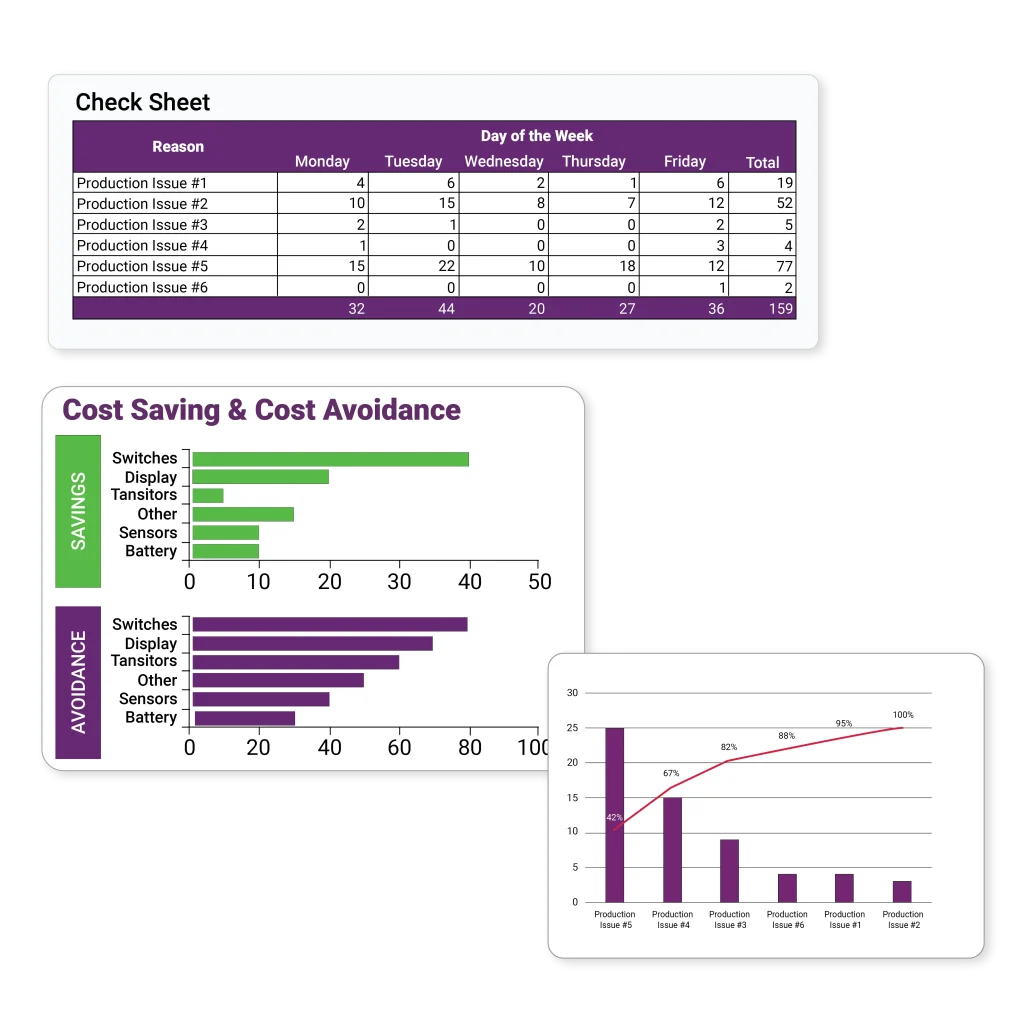
For manufacturers, consistency in product quality is a crucial need. An ERP system for manufacturing allows companies to have quality control measures in place during the manufacturing process, rather than just at the end.
Manufacturers can track and document quality checks at various points in the production process to identify issues early and prevent faulty products from progressing further.
ERP systems can be used to keep track of inspections, quality testing, specifications and certifications that are required by various industry and regulatory standards.
If production problems are detected early on, the possibility of rework, rejected products, material waste and related costs can be minimized.

ERP Software plays a pivotal role in the manufacturing industry, and here are the reasons why:

As the manufacturing industry expands in the UAE, businesses need to run production, inventory, procurement, financial and distribution more efficiently. ERP solutions for manufacturing in UAE enable businesses to consolidate these functions and gain visibility across their operations.

SowaanERP offers region specific features tailored to businesses in the UAE, such as integration with business operations, multi-currency transactions and support with VAT related processes. This streamlines the management of business activities for manufacturers both locally and globally,

An integrated ERP system can offer the flexibility and visibility a business needs to manage its ever-expanding operations in case it is looking for manufacturing ERP software in UAE. from a single platform.

What are the Difference Between Generic ERP and Manufacturing ERP?

Generic ERP systems are built to manage standard business processes like accounting, sales, procurement, inventory and HR across various sectors. However, a manufacturing ERP is tailored to the needs of manufacturing companies. It has production planning, bill of materials (BOM), work-orders, material requirements, shop-floor activities and production tracking features that are specially developed. When it comes to selecting the right ERP software for manufacturing, manufacturers need to pick the one that can handle most of their business processes as well as the requirements of the manufacturing environment.

This is especially significant for companies in specific sectors like food, pharmaceutical, chemical, electronics and other production companies.

Comparison chart between generic ERP and manufacturing ERP systems.
Major benefits of using ERP software in the manufacturing sector.

Manufacturing ERP is beneficial in a number of ways

From enhancing productivity to cutting down on operational inefficiencies and providing better control over the production process, businesses throughout the UAE are embracing manufacturing ERP solutions. A few of the most important advantages are:

Using manufacturing ERP can help to reduce the amount of manual labor required for repetitive tasks and improve communication between different departments, freeing up time for the workforce to focus on more value-added activities.
By providing real-time inventory tracking, manufacturers can ensure that they have the right amount of raw materials and products on hand, preventing overproduction and stockpiling while also mitigating the risk of material shortages.
This helps to minimize delays and enhance production schedules, enabling manufacturers to plan production according to the availability of materials, customer requirements, resources, and production capacity.
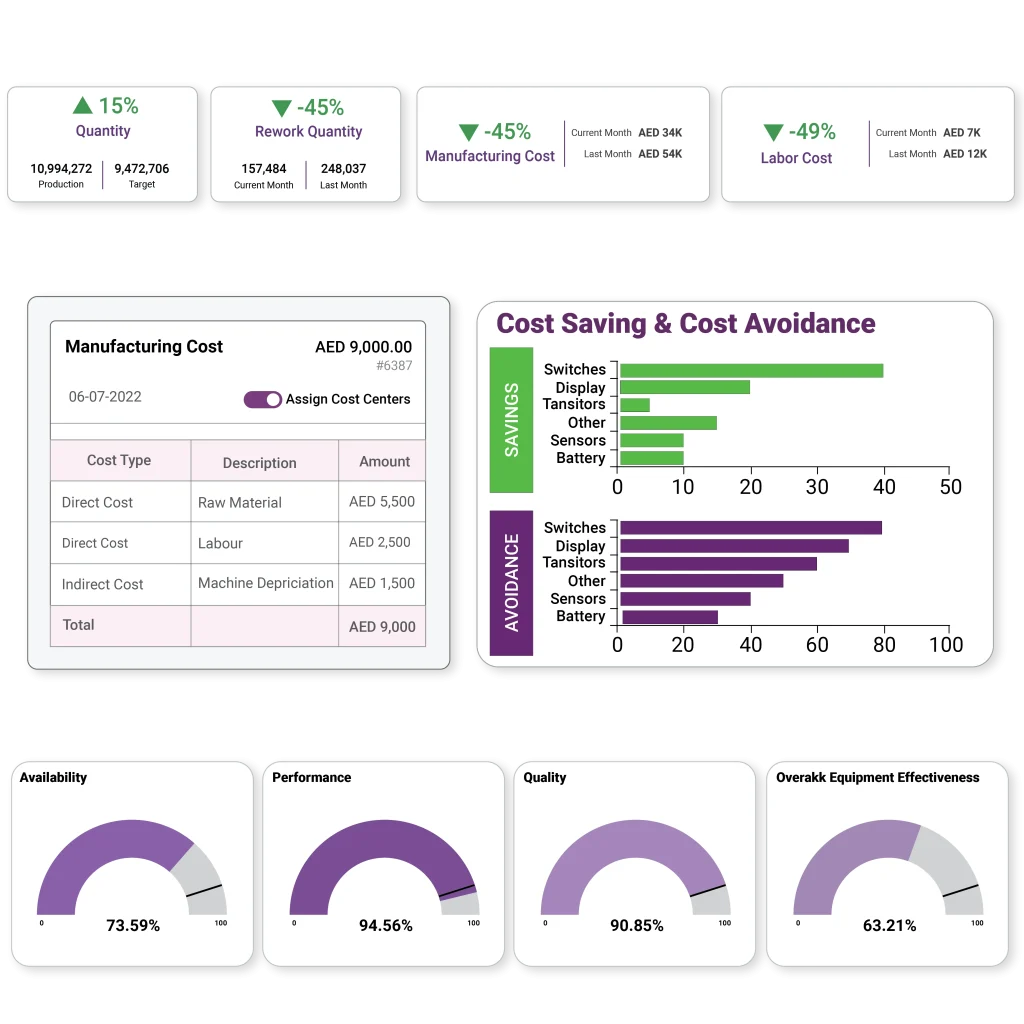
By reducing manual errors, material waste, production inefficiencies, and unnecessary inventory, ERP can help businesses control their overall operating costs.
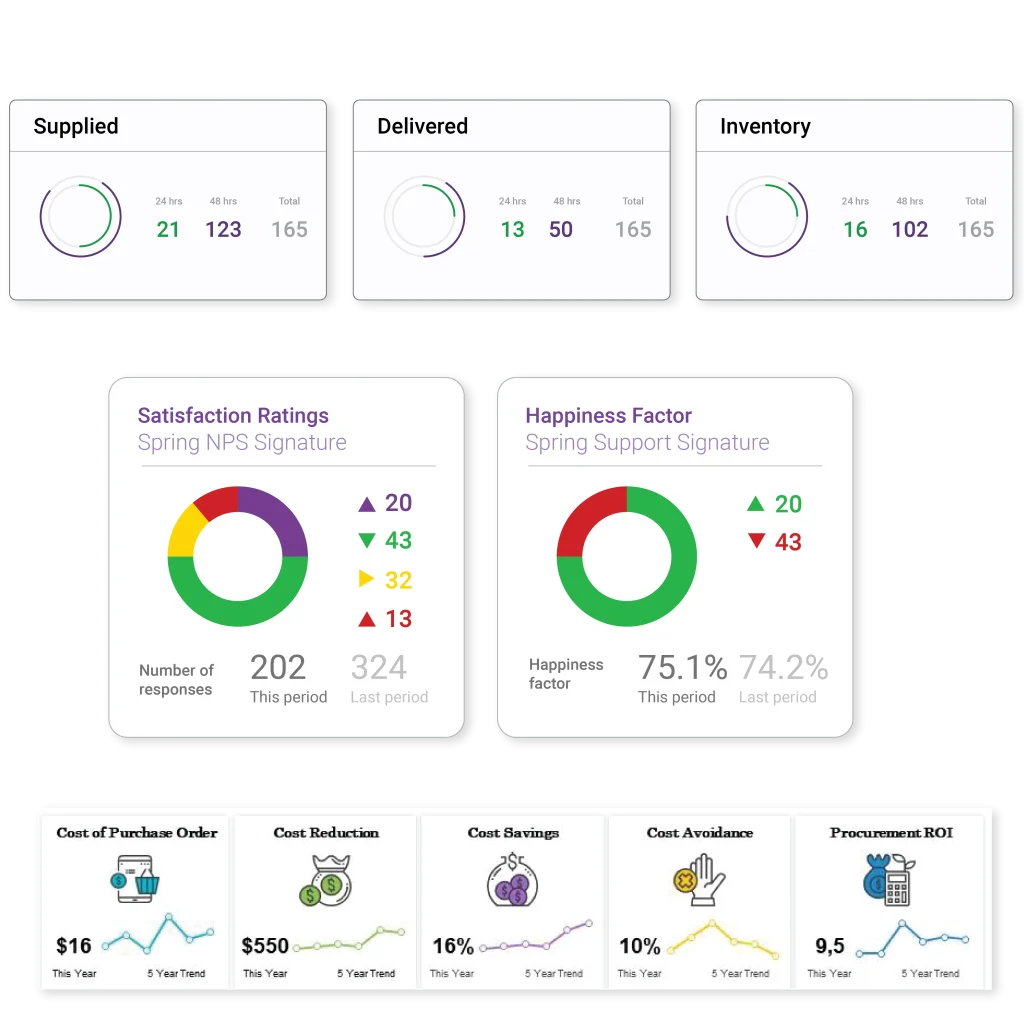
Having a centralized and timely business data provides management with improved visibility on production, stock, procurement, sales and financials.
Manufacturers can ensure that the information needed for quality management and relevant regulatory processes is kept by using integrated reporting and record-keeping.
When manufacturing companies are growing in size, an ERP system can handle the growth of production volumes, the introduction of new warehouses, new products and customer needs from a single solution.

Earlier, manufacturing, inventory, purchasing, sales, and finance were all on separate processes, but now that all these come under a single process, the management can have a better overview of the overall business performance.

ERP Implementation in Manufacturing Industry

To implement ERP in the manufacturing industry successfully, proper planning, process analysis, data migration, employee training, system configuration, and ongoing support are essential. The first step for businesses is to determine their production and operational needs, and then customize the ERP system to align themselves with their business processes.SowaanERP saves businesses to move towards a fully integrated ERP solution that can link manufacturing to inventory, purchasing, sales, finance and more.

Food manufacturers have certain requirements concerning raw materials, batch, expiry dates, quality control, respective recipes, production planning, and traceability. ERP food manufacturing solutions can assist businesses in handling these processes more effectively while keeping a more transparent view of the materials and finished products. Food production ERP can track production stages, inventory, batches and enhance the synchronization between the purchasing, manufacture, warehouse and sales area.
The right Manufacturing ERP software can be a boon to businesses looking to abandon disjointed processes and take control of their manufacturing. An integrated ERP system can help manufacturers become more efficient, whether it’s when planning production, managing inventory, quality control, procurement, or distribution. SowaanERP offers a comprehensive solution that includes manufacturing ERP Dubai, manufacturing ERP UAE, and a scalable ERP software for manufacturing industry.

FAQs

ERP software integrates various manufacturing functions, such as production, inventory management, purchasing, sales, finance, and more, eliminating common manufacturing challenges by having everything in one place. It can be useful to lower the amount of manual data entry, enhance production scheduling, track inventory, pinpoint constraints, and deliver real-time data for improved decision-making.

For manufacturing, ERP can streamline and control key processes such as quality control, work orders, stock control, procurement, manufacturing planning and reporting. This helps manufacturers boost productivity, reduce waste, control costs and gain visibility of the processes.

The ideal ERP system for manufacturing will rely on the production methods, company size, industry needs, scalability requirements, and budget of the company. Manufacturers need to look for a solution that has specific manufacturing capabilities, such as production planning, BOM management, inventory management, work orders, quality management and real-time reporting.

In the UAE, there are several ERP platforms available and utilized by businesses. Each business needs a different ERP, because they are located in varying parts of the world, have varying needs and different budgets. It is crucial for manufacturers to look for ERP software that can not only streamline their manufacturing workflows but also meet the specific needs of businesses in the UAE.

The best ERP solutions may differ according to the industry and company needs. Popular enterprise ERP systems include ERP systems such as SAP, Oracle and Microsoft Dynamics. The choice between the two will depend on the manufacturing, inventory, financial and operational needs of a manufacturing company.

There is no ERP system that is the most popular in every country, and in every industry. The level of ERP adoption is dependent on the size of the business, industry, the geographical location, budget and the functionality. The first criterion manufacturers should consider when choosing an ERP system is the power it has in manufacturing and its ability to expand as the business expands.
In manufacturing, ERP system is utilized to manage and control production planning, raw materials, inventory, purchasing, work orders, quality control, sales, distribution and financial processes. All these activities in a single system allows better coordination between the activities of the manufacturer, reduce the chances of errors, keep track of the production performance and make decisions using real time business information.
The size of the organization, number of users, complexity of manufacturing processes, customizations and integration requirements, and data migration requirements are factors that influence the implementation timeline. Simple installations take a few weeks, complex installations can take several months, depending on the size and complexity of the manufacturing environment.

Cloud ERP or on-premise ERP is simply a question of what your business needs, the IT infrastructure, security concerns, budget and how you want to manage your ERP system. Cloud ERP might offer advantages like improved accessibility, scalability, and lower infrastructure needs, whereas on-premise ERP could offer companies more control over their deployment surroundings and infrastructure.

Contact us for a free review of your needs

Integrate with your favorite apps