
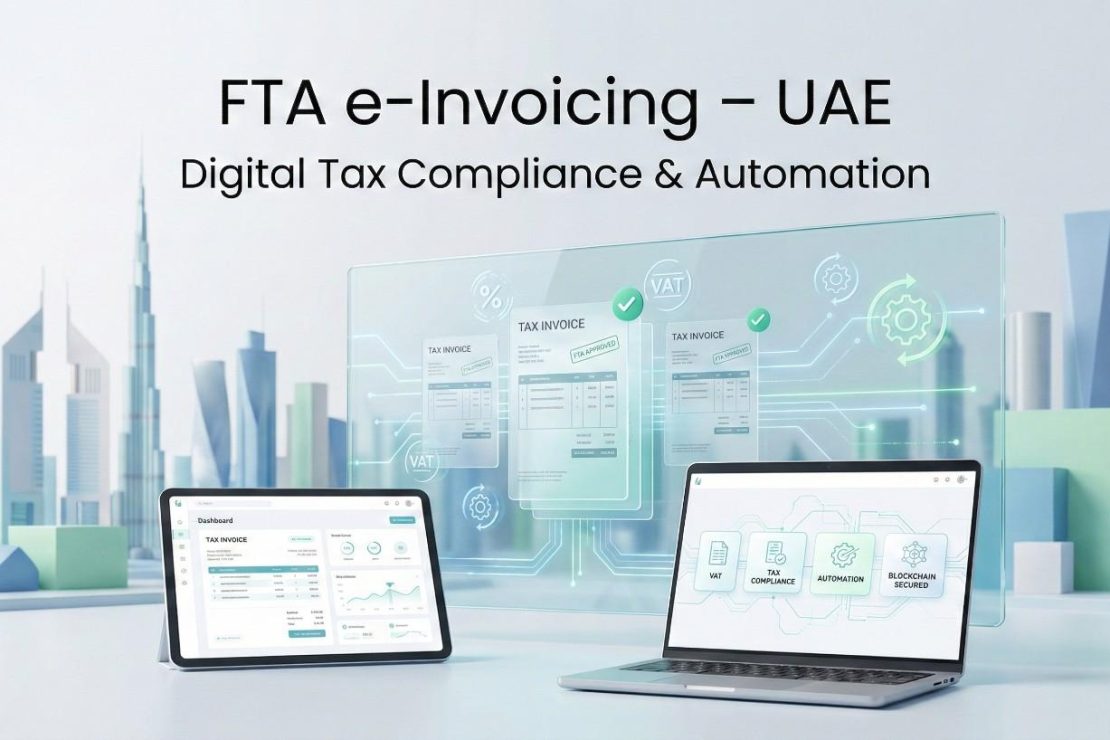
With the digital transformation, every business is shifting towards automation to improve the ease of business processes and minimize manual errors. The Federal Tax Authority (FTA) e-Invoicing system is one of these transformational actions that is changing the way businesses in UAE deal with invoices. The initiative has been included in the UAE efforts of ensuring greater tax transparency, efficiency and the adoption of a paperless environment.
What is FTA e-Invoicing?
FTA e-Invoicing system is a system that has been implemented by the government of the UAE to normalize and automate the process of issuing and receiving invoices. This is a step in the PEPPOL (Pan-European Public Procurement Online) program that delivers best-uniform and safe electronic billing technique. This is aimed at developing a smooth, real-time invoicing system that would ensure that the government standards have been met and enhance efficiency in business transactions.
The Significance of FTA e-Invoicing?
Increased Tax Transparency:
FTA e-Invoicing system provides the possibility of submitting invoices to the Federal Tax Authority (FTA) in real-time. This implies that the businesses are liable to their business transactions and the authorities of the taxation are able to acquire instant access to transaction information and thus transparency of activities is enhanced.
Lower Compliance Costs:
With invoicing being automated, the businesses will manage to lower the overhead compliance costs incurred in dealing with manual invoicing, filing tax returns and auditing. This system avoids errors, delays and discrepancies that may occur when invoicing is done using paper.
Digitalisation of Business Transactions: E-invoicing habit is informed by the wider digitalisation objectives in the UAE. It makes the process of invoicing a business very easy and the economy is becoming highly tech-driven.
Standardized Process:
PEPPOL adoption will guarantee that businesses adopt a common format of invoicing that eliminates the occurrence of inconsistencies and errors in different ERP systems. It also eases the businesses to be in control of both local and international suppliers invoices.
How FTA e-Invoicing Works
Sales Invoice Flow:
Whenever a customer creates a sales invoice, the data is entered in the ERP.
The information in the invoice is sent safely to the FTA-authorized provider through an in-built e-invoicing platform.
The data is processed by the FTA and made to conform to the tax regulations and then transmitted back to the ERP system receiving a status response.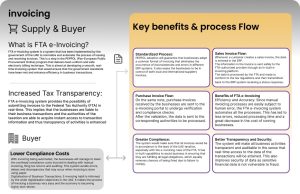
Purchase Invoice Flow:
On the same note, purchase invoices received by the businesses are sent to the e-invoicing portal to undergo verification and compliance checks.
After the validation, the data is sent to the corresponding authorities to be processed.
Benefits of FTA e-Invoicing
Efficiency and Accuracy: Since manual invoicing processes are easily subject to human error, the FTA e-invoicing system automates all the processes. This has led to less errors, reduced processing time and a great decrease in the cost of running businesses.
Greater Compliance:
The system would make sure that all invoices would be in accordance to the laws of the UAE taxation, especially with the e-invoicing rules of the FTA. It has in-built capabilities to assist business in ensuring that they are fulfilling all legal obligations, which equally removes chances of being fined due to failure to comply.
Better Transparency and Security:
The system will make all business activities transparent and auditable in the sense that real-time access to the data of the transactions will be attained. This also improves security of data as sensitive financial data is not vulnerable to fraud.
Scalability:
e-invoicing system is scalable and can be easily integrated with any other ERP system and this means that it can support a business of all sizes, small start-ups and large multinational corporations. It also helps in growth in the future because it provides the flexibility to accommodate the growing volumes of transactions.
Upcoming difficulty in FTA e-Invoicing adoption.
Although FTA e-invoicing has a list of advantages, companies can have some difficulties during the early phases of transition. Certain key obstacles are:
ERP Integration: The problem with ERP integration is that businesses operating with various ERP might have difficulties with integrating them with the e-invoicing system. Nonetheless, several service providers have been providing custom integration to make this process easier.
Training and Adoption:
It might be required to train the employees on how to use the new system. Resistance to change can be alleviated by use of effective training programs that will make implementation smooth.
The Future of the FTA e-Invoicing in the UAE.
The process of FTA e-Invoicing system adoption is a considerable milestone in the process of the transition of the UAE economy to an entirely digital state. With the increased use of this system by more businesses, even more will be done to improve tax compliance, efficiency in operations and the ease of doing business.
Introduction to FTA e-Invoicing.
The UAE businesses are required to adhere to the e-invoicing requirements of the FTA so as not to be subjected to penalties. The following steps can be taken as preliminaries:
Make Your ERP compatible:
Check the compatibility of the e-invoicing: make sure that your ERP system supports e-invoicing and is able to interface with the providers of the approved services by the FTA.
Sign up with an Authorized Service Provider:
Select a reputable service provider that will be connected to the e-invoicing system of FTA to facilitate the smooth transfer of data.
Train Your Team:
Educate your team on how to utilize the new system successfully, so that it uses the new system without breaking the rules and processing invoices efficiently.
The FTa e-invoicing is a critical advancement in the UAE business world that propels operation efficiency and tax payment. By automating the invoicing system and decreasing the number of manual errors, a business will have a chance to focus on growth and innovation and ensure that invoicing is safe, valid, and transparent. Are you yet to embrace e-invoicing, this is the time you ought to be planning on how to embrace this revolutionary system.